

Strengthen Your Vagal Tone
Use this self-care technique to generate a state of calm alertness.
Practicing massage therapy can create stress on the back, neck, and shoulders of even the most conscious practitioner, so self-care is essential. The following yoga poses will warm and prepare the body at the beginning of the workday, as well as unwind patterns of tension at the end of the workday. To best be of service to your clients, it is wise to set aside time to take care of your body. Utilize these simple and effective poses to support your daily wellness and career longevity.
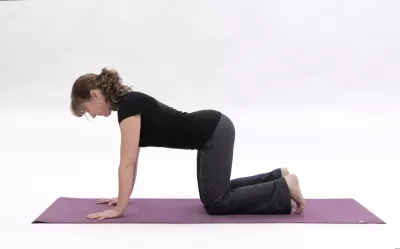
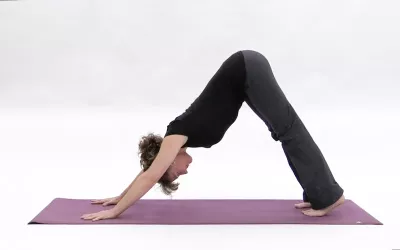
Begin in tabletop position, shoulders over wrists, and hips over knees. Exhale and use your belly to lift your hips up and back. Draw the lower tips of the scapula down the back and toward midline. Draw your chest toward the floor. Establish a straight line from wrists to shoulders, and shoulders to hips. Press your heels toward the floor. If your back rounds, bend your knees. Take several deep breaths. To come out of the pose, drop to your knees on an exhale.
Target areas
Shoulders; upper, middle, and lower spine; hamstrings; calves; feet.
Benefits
Calms the mind, energizes the body, releases head and neck tension, and eases stress, headaches, and insomnia.
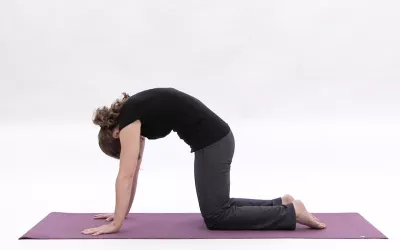
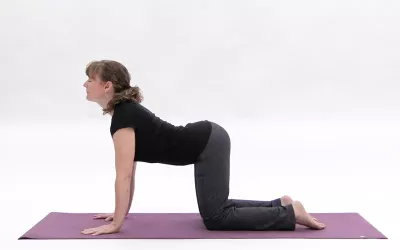
Begin in tabletop position, shoulders over wrists, and hips over knees. Exhale, press your hands into the floor, pull your belly to your spine, and round your mid-back toward the sky. Drop your chin toward your chest. Now, inhale and lift your sit bones (your ischial tuberosity) toward the ceiling. Drop your chest through your arms. Gently gaze upward. A slight energetic draw of the palms toward your knees will open the shoulder girdle and mid-back. Alternate between the poses, matching breath to movement.
Target areas
Upper, middle, and lower spine; abdominals; anterior chest; shoulder girdle.
Benefits
Warms the spine, initiates movement of all spinal muscles in a balanced manner, and releases tension in the shoulders, neck, and spine.
Yoga poses like the Cat/Cow can help you to match your breath to your movements and warm up the spine.
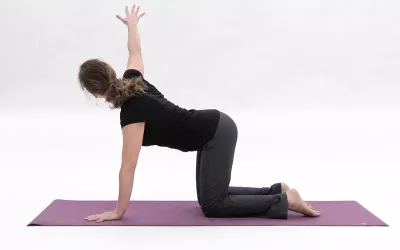
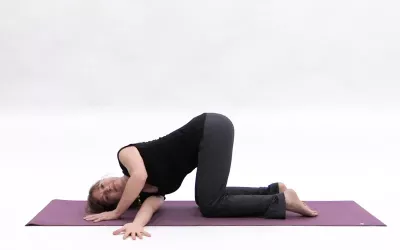
Begin in tabletop position, shoulders over wrists, and hips over knees. Inhale and lift your right arm to the sky. Exhale, pull your belly to your spine, and thread your arm underneath you, ultimately resting on the posterior side of your right shoulder. Maintain level hips. To come out of the pose, press your left palm into the floor, engage your belly, and unthread your right arm, finishing in tabletop position. Repeat on the other side.
Target areas
Shoulders, arms, upper back, and neck.
Benefits
Expands and compresses the muscles of the upper chest, opens the upper and outer muscles of the shoulder, calms the body, and releases areas of stagnation.
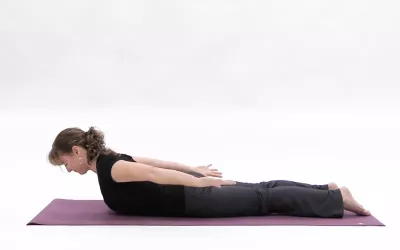
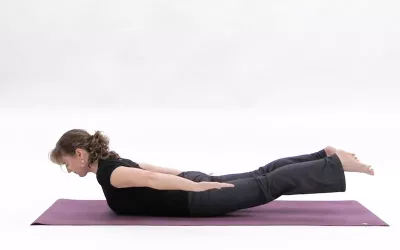
Lie on your belly with arms along your sides, palms up, and forehead resting on the floor. Press your pubic bone into the floor to lengthen your lumbar spine. Press the tops of your feet into the floor. Inhale and lift just your upper body. Press your palms toward the sky. Gaze slightly forward. Gently lift the base of your skull toward the ceiling. Release on an exhale. For added benefit, you can also lift your legs.
Target areas
Upper, middle, and lower spine; glutes; backs of legs.
Benefits
A good starting point for deeper backbends; rather than stretching long, tight muscles, it engages them and resets movement patterns on the posterior body; stretches shortened muscles along the anterior body; and lengthens chest, abdominals, and quads.
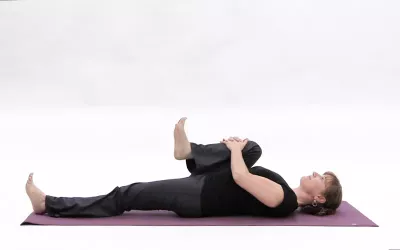
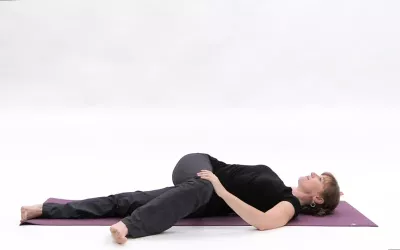
Lie on your back, legs together, feet flexed, and heels pressing toward the end of your mat. Press your left leg into the ground and bring your right knee toward your right lateral rib cage. On an exhale, use your left hand to bring your bent right leg across your body. Keep both shoulders on the ground. Extend your right arm to the side or overhead. Look to the left, straight up, or to the right. To release, use your left hand on the inside of your right knee to guide your leg back to neutral. Repeat on the other side.
Target areas
Chest, low back, hips.
Benefits
Wrings out and massages internal organs, stretches the spine and back muscles, and stretches the low back, lateral hip, and iliotibial band.
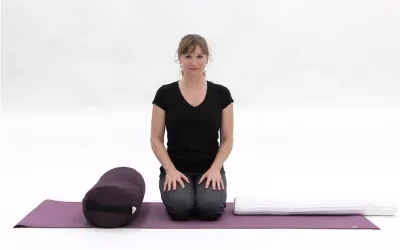
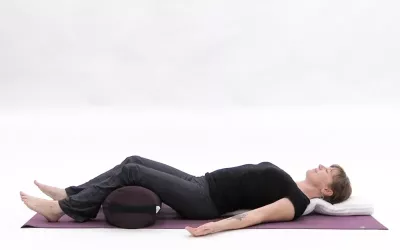
Roll up a blanket lengthwise and situate one end against your sacrum. The blanket will span the length of your spine, so choose something moderately soft, but that will create lift. Place pillows or a bolster under your knees and extend your legs. Use your hands just behind your hips to support you as you roll down onto the rolled blanket. Press the blanket up beneath your cervical spine for more support. Extend your arms to the sides, palms facing up. Allow your scapula to wrap around the blanket. Clear your mind and lie resting for at least 10 minutes.
Target areas
Total body relaxation.
Benefits
Activates the parasympathetic nervous system; invites the anterior body to open passively while the posterior body releases and shortens.
Use this self-care technique to generate a state of calm alertness.
Use this cord-cutting exercise to reclaim your energy and restore your vitality.
Sound healing can be easy to incorporate into your practice and into your daily self-care routine.
It’s easy for us to get stuck in our work—physically, mentally, emotionally. Let’s look beyond the usual self-care routines to find better ways to get unstuck and back to the work you love.